Staring at your screen after a packed commute, shoulders creeping up, neck screaming by lunch? You’re not alone. That desk slump hits hard in tight urban spaces, zapping energy and fogging your focus. But here’s the good news: simple tweaks can straighten you out, boost your vibe, and keep you sharp without fancy gear or gym time.
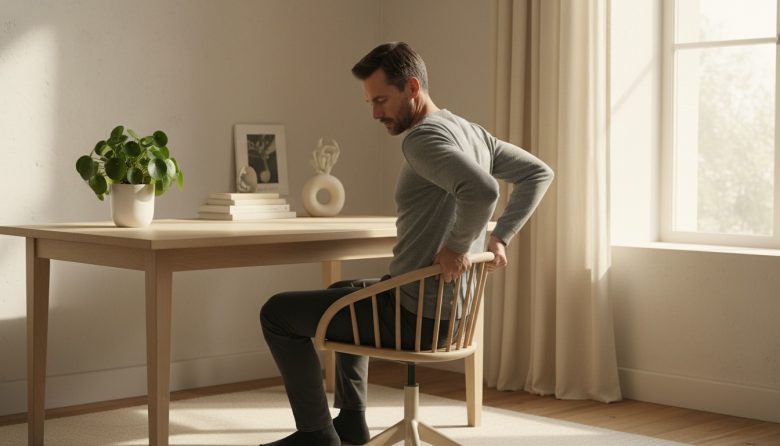
Picture this: a regular office worker in a cluttered small apartment desk, flipping from slouch to aligned in seconds. No pressure, just feel-good shifts that fit your day. We’ll cover workspace hacks, quick resets, and habits that stick. Tease alert: stick around for your 2-minute fallback to crush busy days.
These moves draw from real-life desk warriors who’ve reclaimed their posture amid emails and late dinners. Ready to ditch the hunch? Let’s dive in and get you sitting strong.
Why Desk Slumps Drain Your Day (And How to Spot Yours)
That subtle forward lean during endless emails? It’s quietly tightening your shoulders and blurring your thoughts. Post-commute, when you’re powering through reports, the hunch sets in fast. Tight traps, foggy afternoons, even random back twinges signal it’s time to check in.
Urban stats back it up: folks glued to desks report up to 40% more neck strain from poor sitting. But spotting yours is easy—pause mid-scroll. Feel your chin jutting forward? Shoulders rounded like you’re hugging the keyboard? That’s your slump cue.
These drains aren’t just physical. They kill productivity, turning sharp ideas into slogs. Transitioning to fixes now means less fatigue by dinner. Imagine ending your day energized, not wrecked.
Link it naturally to breathing: pair posture awareness with How to Practice Quick Deep Breathing Exercises to amplify that reset feel.
Prime Your Tiny Workspace for Effortless Alignment
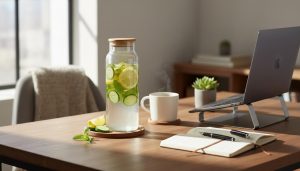
Start with feet flat on the floor, knees at 90 degrees—your base for stability. No fancy standing desk? Stack books under your monitor to hit eye level, about arm’s length away. This hack works in cramped apartments or crowded co-works.
Chair tweaks next: scoot back so hips match knee height. Wrists hover neutral over keys, elbows tucked close. Test it—your screen should sit top-third at gaze line, cutting neck crane.
Real example: Sarah, a remote marketer in a 400 sq ft studio, propped her laptop on old notebooks. Instant relief, no cost. These low-effort setups prime you for alignment all day.
Extend arms forward, palms up, then let them drop—feel the release? Your tiny space just became posture-friendly. Smooth move to quick tips ahead.
7 Quick Tips to Snap Out of the Hunch
Mid-meeting or email marathon, these resets take seconds. Each one cues a feel-good lift, no sweat. Urban-proof for desk life.
- Roll shoulders back and down: Imagine squeezing a pencil between your blades. Instant openness floods in.
- Tuck your chin gently: Like nodding yes to a double chin. Neck elongates, headaches fade.
- Breathe deep into belly: Four counts in, four out. Clears fog, loosens ribs.
- Feet anchor flat: Press into floor for grounded power. Hips unlock naturally.
- Wrists float neutral: Hover above keyboard. Goodbye tension buildup.
- Scan head neutral: Ears over shoulders cue. Screen time feels lighter.
- Elbows in at 90s: Arms relaxed, not winged out. Flow returns to typing.
Pick two per hour. Feel the shift? These build your snap-back muscle effortlessly.
Do’s and Don’ts: Sidestep Your Posture Traps
Coffee break slump sneaking up? This table nails common pitfalls with scannable swaps. Real office workers swear by these contrasts for daily wins.
| Don’t Do This | Do This Instead | Instant Win |
|---|---|---|
| Lean forward chasing the screen | Sit back fully, screen at eye level | Neck strain drops, focus sharpens |
| Slump shoulders to ears | Drop and roll them back | Tension melts, breathing eases |
| Cross legs unevenly | Feet flat, knees parallel | Hips balance, lower back chills |
| Perch on chair edge | Sink hips back against support | Core engages lightly, energy holds |
| Wrist bend on desk edge | Neutral hover, soft pad if needed | Forearms relax, typing flows |
| Chin thrust forward | Double-chin tuck, crown lifts | Spine stacks, headaches retreat |
Glance here during lunch scroll. One swap, big payoff. Leads perfectly to busy-day shortcuts.
For Busy Days: Your 60-Second Chair Reset
Overtime crunch before late dinner? This bare-minimum routine revives you fast. No standing if you’re pinned in meetings.
Step one: feet flat, roll shoulders thrice. Chin tuck, hold five breaths. That’s 20 seconds—feel taller already?
Next: wrists circle loose, elbows hug sides. Quick hip scoot back. Boom, 40 seconds in, slump gone.
Last: gaze circles—up, down, side to side. Neck loosens without drama. Total under a minute, pure reset.
Tie in movement: follow with moves from the Beginner’s Guide to Home Bodyweight Exercises if you snag a break. Fits overtime chaos seamlessly.
This variation scales your routine. Builds confidence for tougher days ahead.
Make It Sustainable: Posture Habits That Stick
Phone alarm every 30 minutes: “Posture ping.” Ties to your coffee sip or screen stretch. Repeatable, no overwhelm.
Commute ritual: stand tall on train, carry it to desk. Desk arrival cue—align before first email. Small apartment? Mirror check by door.
Track casually: note energy spikes in notes app. Pair with meals for bonus—upright eating aids digestion, like in a Weekly Budget-Friendly Healthy Eating Plan.
Your 2-minute fallback: shoulder rolls, chin tucks, deep breaths. Do it twice daily minimum. Habits compound quietly.
Non-athletes like you thrive here—no gear, just consistency. Desk days transform over weeks. You’ve got this.
FAQ
What if my chair isn’t adjustable?
Prop feet on a box or thick book for thigh parallel to floor. Use a lumbar roll from towel for lower back curve. These swaps mimic adjustability in any setup, keeping you aligned without upgrades.
How often should I do posture checks?
Aim for every 20-30 minutes during screen time. Set subtle cues like email send or water sip. Consistency beats perfection—short checks prevent deep slumps.
Any fixes for switching to a standing desk?
Elbows at 90s, screen eye-level, weight even on feet. Alternate sitting every 20 minutes to avoid fatigue. Soft mat underfoot eases legs in small spaces.
How to ease shoulder pain from too much screen time?
Roll shoulders down-back five times hourly, add wall angels: arms slide up-down on wall. Combine with deep breaths for release. Pain fades as habits build.
Quick tweaks for small spaces with no room?
Multi-use desk against wall—feet flat, stack for screen height. Chair tucks under fully. Wall leans for stretches double as storage hacks, fitting tight apartments perfectly.